
Aesthetic Revillaging vs. Structural Revillaging
Why we need both, and the risks of differentiating community as lifestyle content and community as survival infrastructure

I almost published an article scolding people for making Instagram carousels about community-building. But for weeks I’ve been hovering around this article wondering why it didn’t want to finish itself.
In my recent notes, I’ve been complaining about people ‘posing as experts’ and ‘treating villages like a trend.’
Then I realized: I was just jealous.
Jealous that cool girls are writing carousels that get more views than my anthropological research. Jealous that newbies to community-building are building huge followings while I’m still struggling for reach after 8 years of lived experience.
In the lack of visibility, I felt like my expertise and the lived experiences of villagers who’ve been fighting for this recognition for decades was being dismissed.
And that jealousy was about to make me gatekeep something that I care to my bones about, which is building villages.
So I pivoted. The main aim of the original article was to label the binary of modern village building approaches I’ve seen, which I call aesthetic revillaging and structural revillaging.
Instead of assigning superiority (like I was going to), we’re going to examine how these different camps actually need each other.
The risk I was afraid of
Aesthetic revillaging has been appearing in potluck carousels, influencer content on being a villager, and flashy monthlong pop-up villages in exotic locations. It’s what has been getting all the attention.
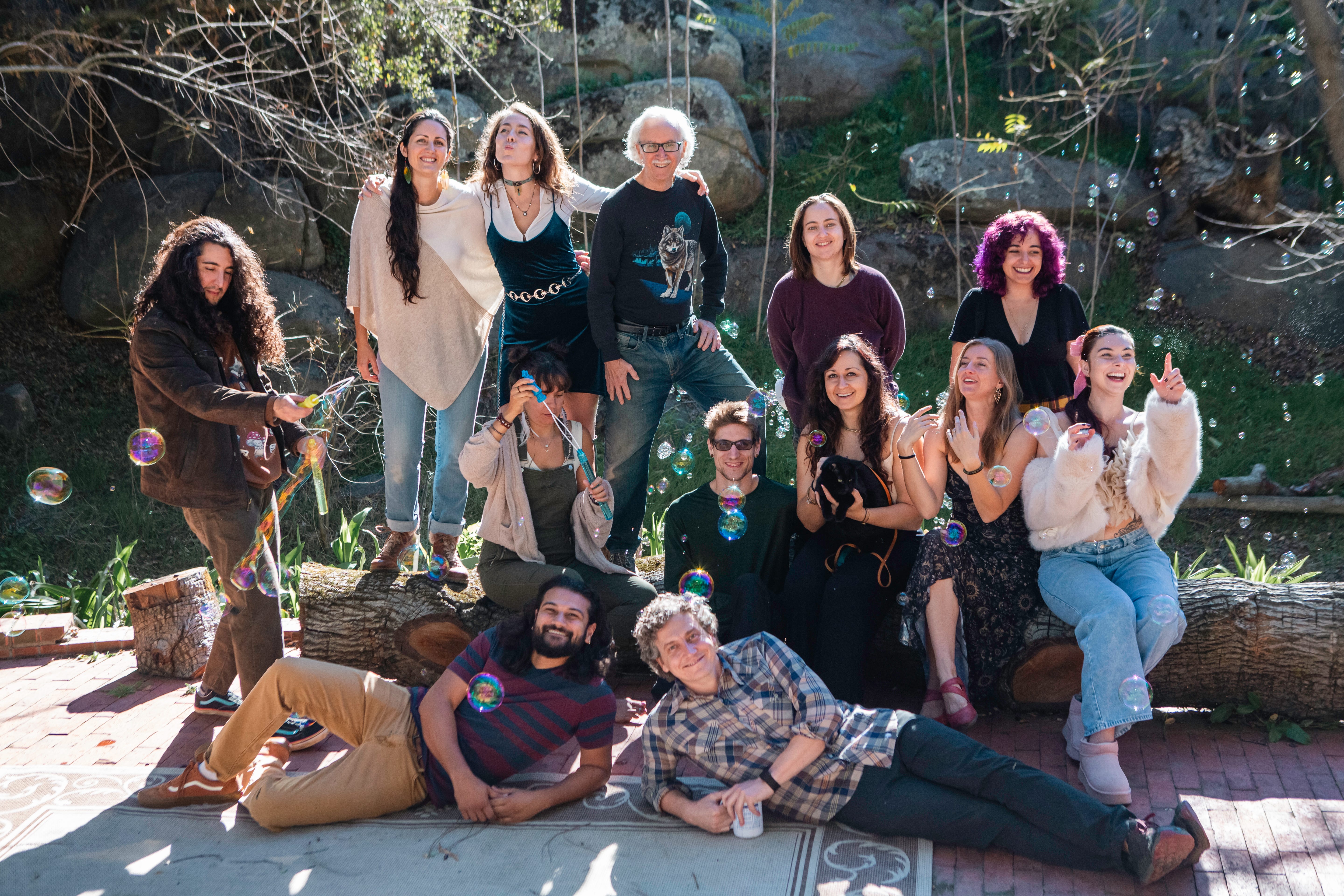
Of course, I was apprehensive that this could “village-wash” the movement, and I had already seen it start to happen in the form of AI-generated carousels oversimplifying community to just shared meals and group chats.
Marketing analysts have noted how brands have shifted from selling sex to selling community. As both a marketing tactic and a trend, aesthetic revillaging captures what draws people to community — belonging. Notions of belonging are easy to sell, because our primal need to belong compels us so deeply.
Meanwhile structural revillaging has been innovating in governance design, land acquisition, and conflict navigation for decades. My commitment to building villages ignited when I realized that it affords us the opportunity to fundamentally redesign how we live by taking back the control over our environmental systems.
My emotions were a cocktail of happiness at seeing village building take off and disgust at feeling like this new version would cheapen the vision. I was afraid that in all this noise, we’d get tacky, knock-off, pseudo-sustainable communities rather than the real solar punk world I want to build.
But I realized…
These approaches are not in competition—they’re incomplete without each other.
Structural revillaging has been a “grungy alternative lifestyle” for too long. Pioneers with their heads down have been doing the hard, unglamorous work. But rarely do they look up (or rarely do they have the bandwidth) to translate the findings of their work to be legible in mainstream contexts.
The thing is, structural revillaging NEEDS better marketing, visuals, storytelling, and aesthetics to reach people.
And aesthetic revillaging is making villages accessible to people who wouldn’t have discovered them otherwise.
Both have their strengths and weaknesses, and while I still think that structural revillaging is the end game, we can certainly combine the best of both.
The strengths & weaknesses of aesthetic revillaging
This type of revillaging focuses on the outwardly pretty aspects of community, of which there are actually many: sitting in circles, sharing meals, belly laughter, caring for each other’s children, being in nature, growing old together, and more.
Aesthetic revillaging strengths
Makes community feel attainable, not intimidating
Meets people where they are (scrolling Instagram, not reading 50-page ecovillage manifestos)
Normalizes being a villager and creates cultural permission (“if they’re doing it, maybe I can too”)
Acts as the on-ramp that gets people curious enough to go deeper
This approach is being practiced by content creators, creative professionals, event producers, and other cultural columnists who are brilliant in storytelling and skilled at visual curation.


Aesthetic revillaging weaknesses
Oversimplifies the idea of a village and applies it broadly
Doesn’t address deeper issues of social justice, intergenerational support, and emotional labor, to name a few.
Usually fits into existing paradigms rather than challenging extractive systems
Lacks the resilience and coordination for long-term impact and typically finds ways to bypass the uncomfortable or confrontational parts of community
Real community doesn’t let you stand at the center. It demands you decenter. It asks you to regenerate yourself, confront your shadows, and grow past the version of you that thought belonging would come easy.
This is quite difficult in mainstream media where you’re expected to have “main character energy” all the time.
The strengths & weaknesses of structural revillaging
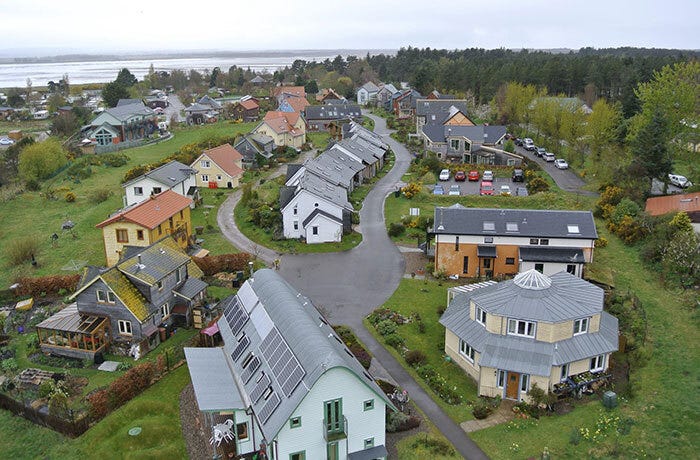
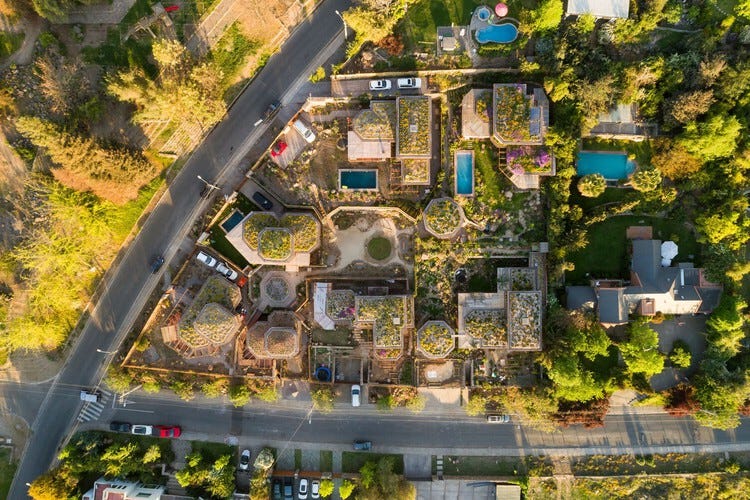
Structural revillaging is what it sounds like—infrastructure, buildings, systems, and assets that support physical, intergenerational villages.
Structural revillaging strengths:
Builds resilient systems that last beyond individual enthusiasm in the form of physical villages that support a better way of life
Creates interdependence through shared land, pooled resources, and financial cooperation that make mutual aid automatic, not heroic
Holds people accountable to grow because proximity makes your patterns visible and you can’t easily ghost when things get uncomfortable
Restructures survival away from individual consumption by coordinating resources.
Innovates on new governance, economics, and social technologies at local scale
This approach is being practiced by land-based ecovillages, co-housing communities, community land trusts, cooperative developers, and long-term intentional communities that have been refining regenerative community models for decades.
Structural revillaging weaknesses:
Inaccessible entry points like buying land, navigating legal regulations, and understanding governance models require resources, time, and knowledge most people don’t have
Poor storytelling where decades of innovation in cooperative living remain largely undocumented or told in academic/coded language that doesn’t reach mainstream audiences
A rustic reputation that is often perceived as fringe, alternative, or only for people willing to sacrifice comfort and aesthetics
High barrier to entry that requires confronting your shadows, navigating conflict, and tying your financial survival to others, which feels terrifying if you’ve been conditioned toward independence
Slow to scale, because building physical infrastructure, acquiring land, and developing operational systems takes years, not months
The unglamorous reality is that structural revillaging is messy, uncomfortable, and requires systems, skills, and emotional capacity most of us weren't socialized with.
These communities are living laboratories that are testing what humanity needs to know about cooperative living, regenerative economics, and designing societies that actually work for everyone. But it’s practically impossible to find good stock photos of physical villages online.
Why they need each other
Here’s what I’ve come to understand: aesthetic revillaging and structural revillaging aren’t competing visions. They’re two halves of the same movement, and we’re crippled without both.
Aesthetic without structure creates unsustainable hype. People get excited, gather for potlucks, create group chats, maybe even attend a pop-up village. But without governance systems, conflict resolution skills, or shared ownership models, that energy dissipates the moment things get hard. Inspiration without infrastructure can’t weather storms.
Structure without aesthetic stays hidden from mainstream audiences. For decades, brilliant experiments in cooperative living, regenerative economics, and community governance have been happening in ecovillages and intentional communities worldwide. But most people have still never heard of sociocracy, community land trusts, or consensus decision-making because the people doing this work haven’t prioritized storytelling. The movement has stayed fringe, available only to those willing to dig through obscure forums and self-guided study.
Aesthetic revillaging gets the attention, but structural revillaging gets the results.
If the movement stops at aesthetics, and we treat village as lifestyle content instead of survival infrastructure, then we’ll build a trend that fades when the algorithm moves on.
But aesthetic revillaging isn’t the enemy. It’s the on-ramp. It’s how people learn that community is even possible. It’s the potlucks and group gatherings that can eventually lead someone to say, “Hey, what if we actually lived together?”
If the village building movement stays stuck in structure without learning to tell better stories, then we’ll keep the innovations locked away in insular communities most people will never discover.
The future requires people who can do both. And it requires aesthetic and structural revillagers recognizing what the other provides.
So how do we actually merge these approaches so that revillaging doesn’t just “have its moment”, but becomes a mainstream movement?
My breakthrough
I was horrified when I realized I was becoming a tone police officer. This kind of voice can be helpful to guide standards, but also sows discord in social movements and makes them unwelcoming places.
My job isn’t to dictate who gets to talk about community.
My job is to do the deep work AND tell better stories about it.
What I’m learning is that there’s an assumption in traditional village building that it needs to be unglamorous, serious, hard work. And often times that is what is required. But the serious attitude is kind of like leftover trauma from living in authoritarian paradigms. If we can’t have fun while we build a solar punk world, something’s wrong.
So What Do We Do?
I am committed to making villages mainstream.
Here’s what I’m resolving to do:
I’m going to stop resenting the aesthetic revillagers. They’re doing something I haven’t done well enough. I wasn’t making this movement feel possible to people who aren’t going to read a 3,000-word essay about societal redesign.
And I’m going to get better at storytelling. At visuals. At making structural revillaging feel as exciting as it actually is.
If you want to see some of the more accessible content I’ve been creating on village building, check it out:
Because the movement doesn’t need gatekeepers. It needs people willing to do the deep work AND people willing to make it beautiful. It needs village nerds AND content creators. It needs land-based communities AND pop-up villages that plant seeds.
It needs both. And I almost forgot that, because I thought being a “thought leader” meant doling out harsh criticism for what doesn’t meet the standard.
If you’re revillaging aesthetically, keep going. You’re the on-ramp.
If you’re revillaging structurally, document it better. Tell the stories. Make it visible.
And if you’re doing both—you’re exactly what the movement needs.
— Nicole
PS If you’re a village builder, seeker, or community member, help us understand what’s actually working. Take the 2026 Village Building Trends Report survey and contribute to the data that this movement needs.
Support Terrenity
As a village builder writing in the service of a solar punk future, I’m determined to keep Terrenity free to read and publicly available for everyone.
Producing Terrenity, however, is not free.
If this work matters to you and you’re able to support it, please consider a paid subscription and help keep Terrenity going for as long as it’s needed.
Or if you liked this article, you can leave a tip at ko-fi.com/terrenity
As a veteran of the 1960s rural hippie communes, all of this is music to my ears. Because I wrote a famous book about rural commune life in the 1960s and early 1970s, I was, and am, often asked by interviewers, "Why did the communes disappear?" To which I answer, "We didn't disappear; we're a bigger movement now than we ever were in the 1970s, and much better organized. Kudos to the succeeding generations of communal pioneers." In earlier decades, I would refer these journalists to the annually published directory of the Fellowship for Intentional Community. Now I just refer them to the Global Ecovillage Network online.
So, sincere thanks to all of you. I'm now 77 years old and the full-time caregiver for the great love of my life and partner of the past 30 years, who is semi-disabled at 88. Findhorn is the only community that I know of that welcomes new residents of our ages. It's OK. I feel better knowing I can have an ambulance arrive at the house in less that 20 minutes, because, if Joe falls, that's my best chance of safely getting him upright, and, possibly, saving his life. We both exercise and consume organically grown food and herbal medicine to stay well, but, at this stage of our lives, sometimes you need someone who can do emergency care.
This was a great read, Nicole! Thank you for your honesty, it opens doors for all readers to up their honesty-game as well.
A thriving ecosystem is a diverse ecosystem. Different voices supporting a healthier style of living... I read win-win-win!